
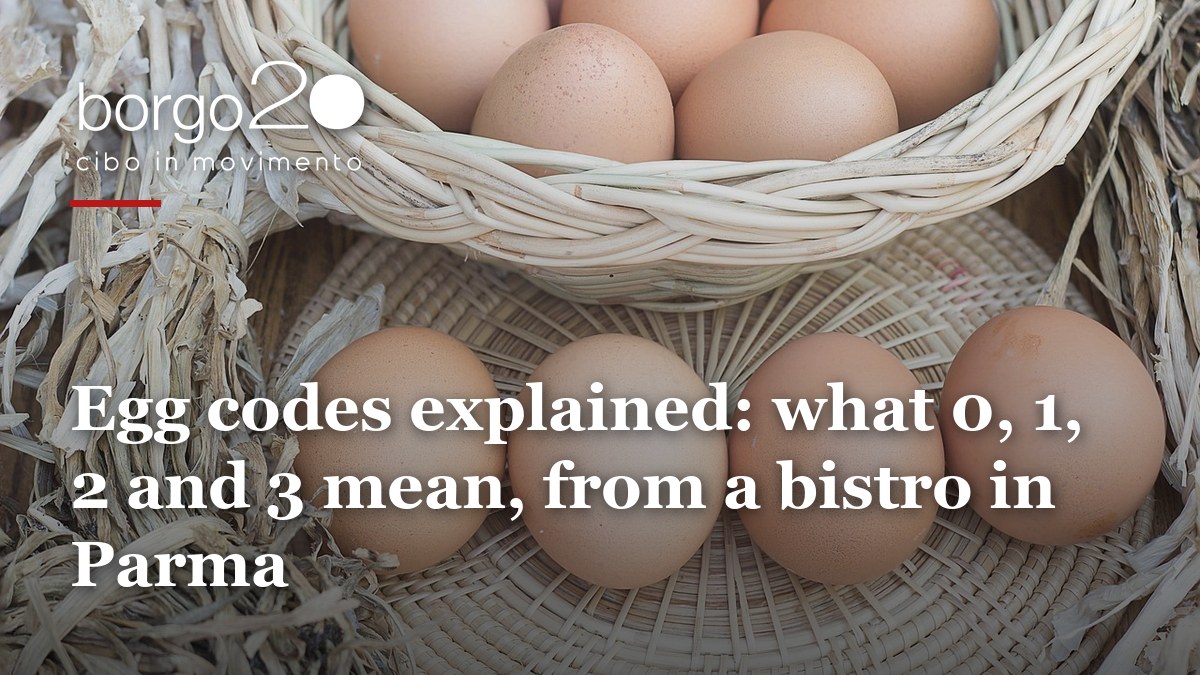
Take an egg out of the fridge and turn it under the light. There’s a line of red letters and numbers printed on the shell. Almost nobody reads it, yet it’s the egg’s ID card. At Borgo20, a restaurant near Parma Cathedral, we only use eggs from free-range hens, and that little code tells you so at a glance. Here’s how to read it in thirty seconds, standing in front of any supermarket shelf in Europe.
Egg codes explained, digit by digit
The first digit matters most. It tells you how the hen that laid the egg lives:
- 0 – organic: hens with outdoor access, organic feed and fewer birds per square metre in the henhouse.
- 1 – free range: during the day the hens can go outside onto open ground, with at least 4 square metres each.
- 2 – barn: no cages, but the hens stay indoors all the time, in sheds with up to 9 birds per square metre.
- 3 – cage: so-called “enriched” cages, with only a little more space per hen than a sheet of A4 paper.
Next come two letters: the country where the egg was laid (IT for Italy). Then a code for the town, the province initials and the number of the farm. If you spot PR among the numbers, the hen lives in the province of Parma. That single line makes every egg traceable back to its henhouse.
The same system is used across the whole European Union, so it works wherever you’re travelling.
What the number means for the hen
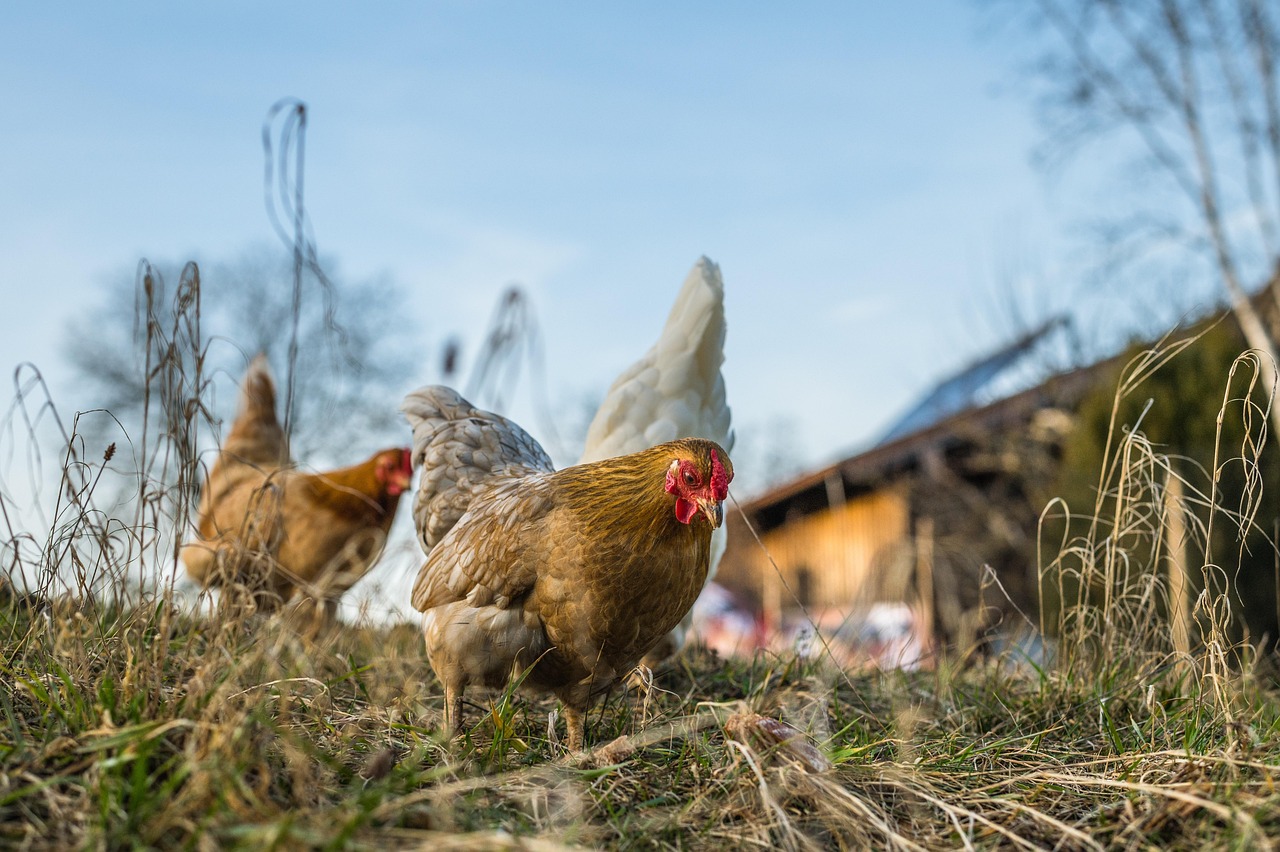
The difference between a 3 and a 1 is not a labelling detail. A hen that can go outside scratches the ground with her feet looking for seeds and insects. She takes dust baths to clean her feathers. She sits in the sun. In a cage, even an “enriched” one, she can barely do any of that.
That one digit on the shell sums up how much room she had to be a hen.
Our view is simple: an animal that lives well gives a better product. You are what you eat, and that goes for what the hens eat too.
Where to eat in Parma: our free-range egg dish
Our eggs come from a supplier in the province of Parma, and only from free-range hens. At the moment they star in a dish with a slightly cheeky name, Dov’è l’Uovo Ruspante? It means “Where’s the farmyard egg?”: in Italian, “ruspante” is the word for a hen that scratches around in the open.
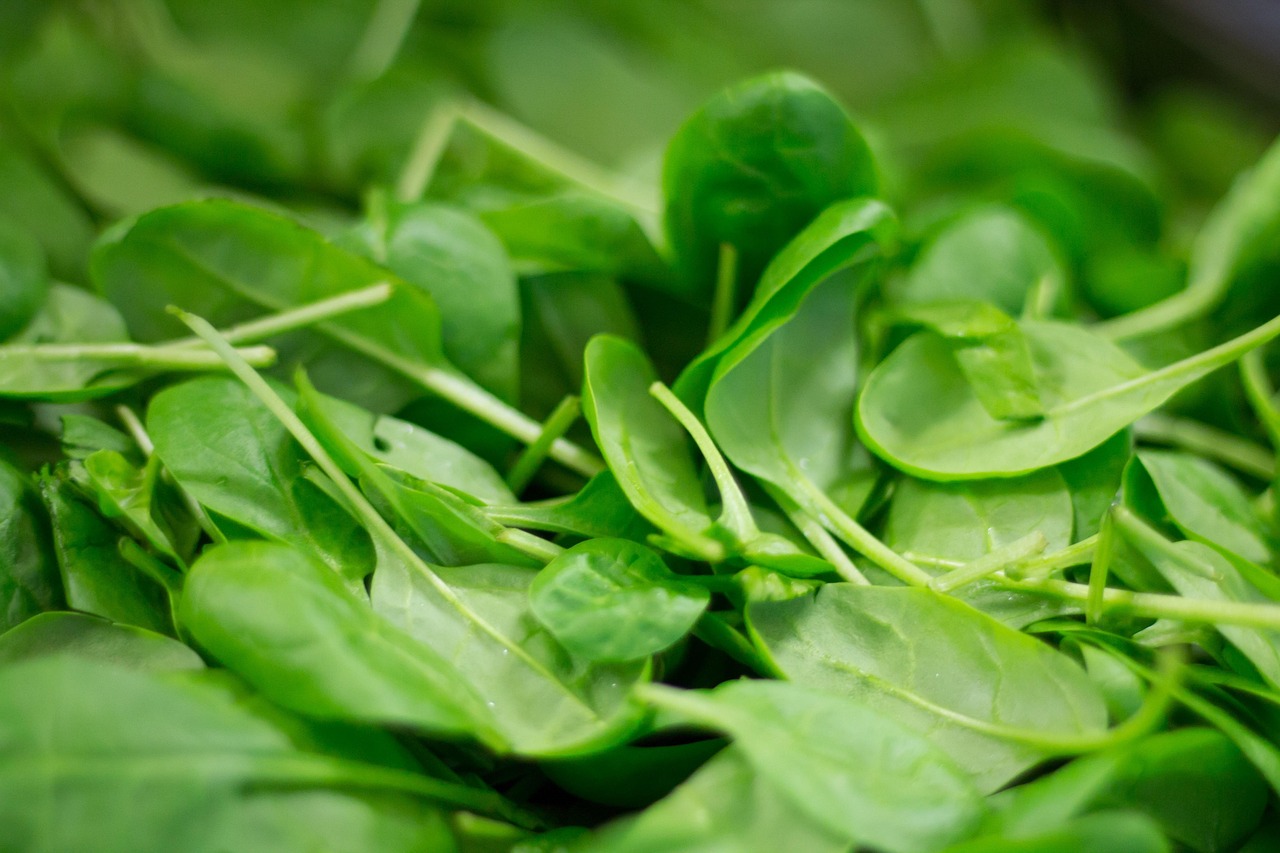
The egg is cooked at low temperature, meaning it’s held for a long time at a gentle, steady heat, a technique that keeps the yolk creamy. Around it: a nest of freshly sautéed spinach, a smoked potato foam, crisp croutons of Pan di20 (our own long-risen bake, a bit like a Turin-style pan pizza but its own thing: here’s what Pan di20 really is) and a dusting of peperone crusco di Senise IGP, a sweet dried pepper from Basilicata in southern Italy.
If you’re looking for the best restaurants in Parma for your own taste, here’s a simple question to ask at the table: where do the eggs come from? It works anywhere, including at ours.
At the shop: what to check beyond the number
Egg boxes love cartoon hens and impossibly green meadows. Ignore the drawings. Look at the code on the shell, then at the official wording on the box (“free range eggs”, “barn eggs” and so on). In Italy, even the word “ruspante” on eggs is not one of the four official farming terms: the digit is what counts.
Three more useful things:
The date. The “best before” date is set at no more than 28 days after laying. If the box also shows the laying date, even better: you know exactly how old the egg is.
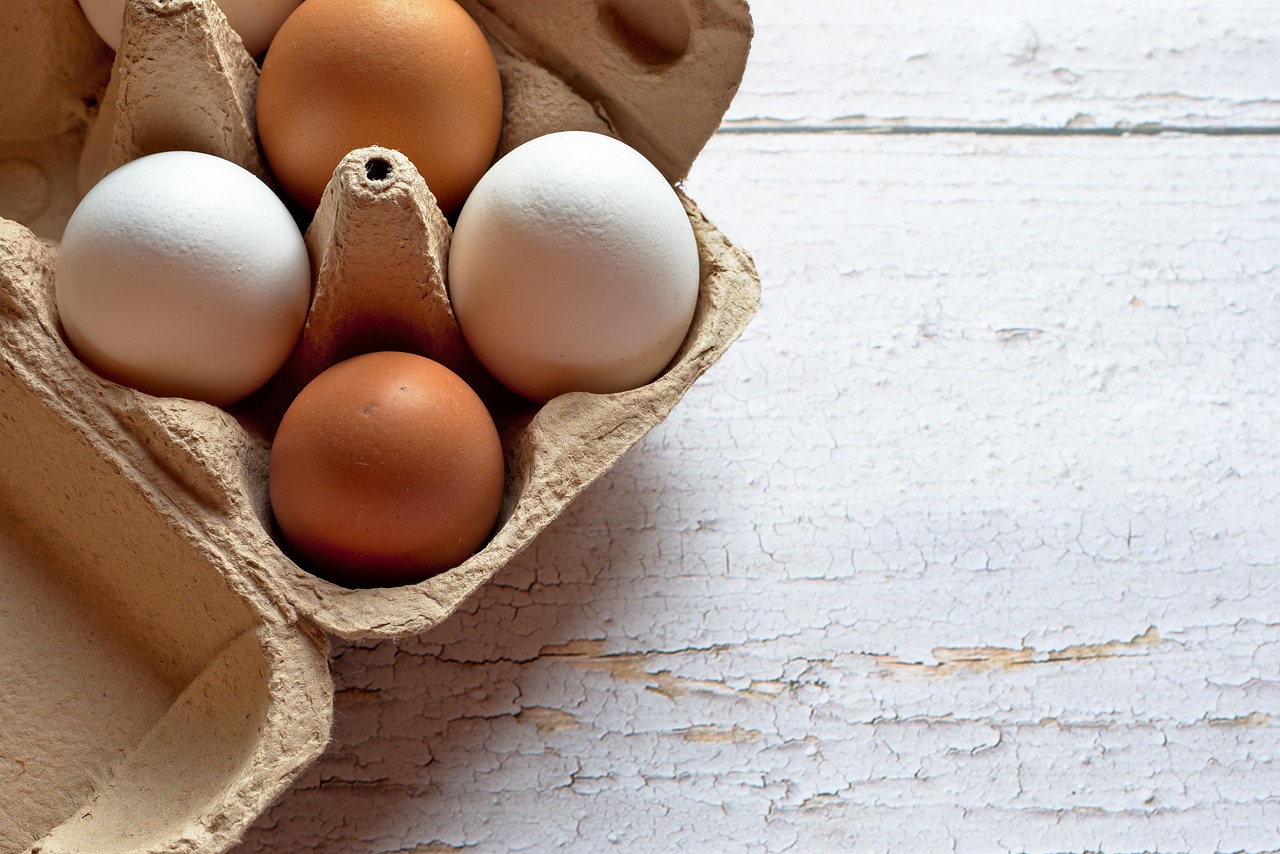
Yolk colour. It depends on what the hen eats (maize, grass, and sometimes pigments added to the feed), not on freshness. A bright orange yolk is no guarantee. Shell colour, white or brown, simply depends on the breed.
The glass test. At home, put the egg in a glass of cold water. A very fresh egg sinks and lies flat. As it ages, the air pocket inside grows and makes it stand up.
If you’d like to taste a free-range egg cooked our way, have a look at the menu: it changes often and follows the seasons. Then book a table online or call us on +39 0521 234565. You’ll find us at Borgo XX Marzo 14/16, in the old town, from Tuesday to Saturday.