

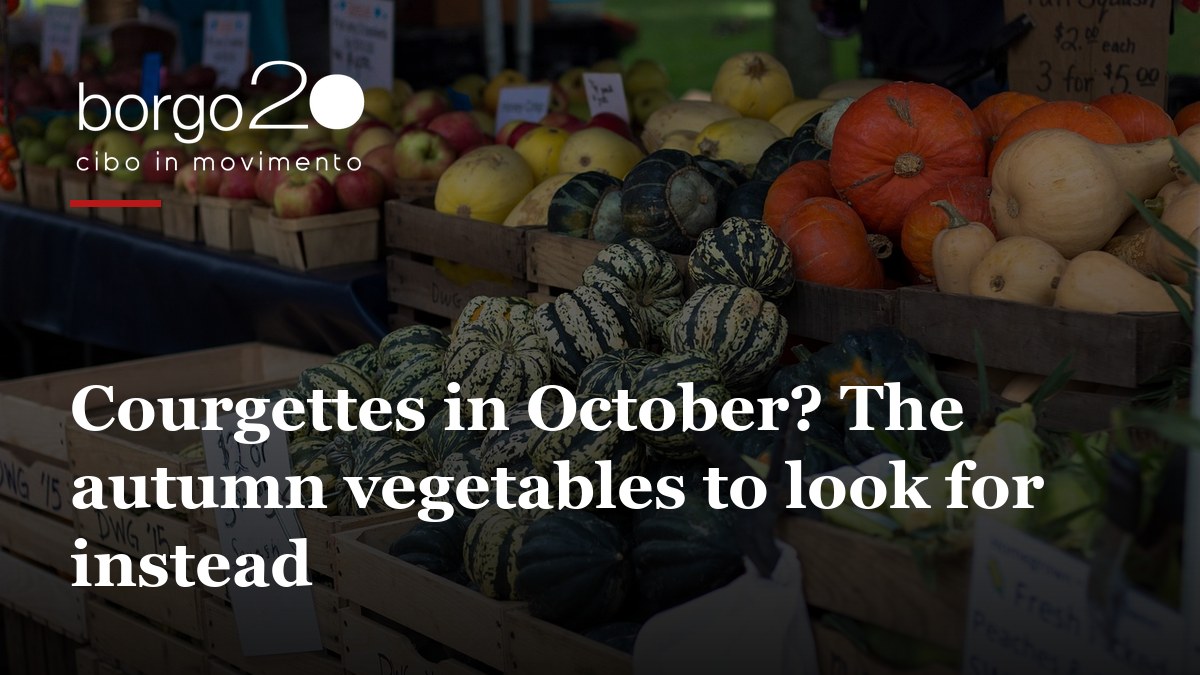
October, Saturday market. The stalls are piled with squash of every shape, bunches of black kale still wet from the morning, and knobbly tubers that look like ginger but turn out to be Jerusalem artichokes. Then you walk into a supermarket and there they are: courgettes. Shiny, identical, exactly like the ones you bought in July.
Nothing wrong with a courgette. In July.
In October, though, that courgette has either travelled a long way or grown in a heated greenhouse. And you can taste it.
Grilled vegetables, all year round
Let’s be honest: grilled courgettes, aubergines and peppers have become the standard side dish in Italian restaurants. January or August, it makes no difference. It’s convenient for the kitchen: same shopping list, same plate, no surprises.
The catch is that they are summer vegetables. They love heat and long days. To have them in autumn and winter you need heated greenhouses or lorries coming up from much further south. Carlo, the owner and chef of borgo20, personally decides what comes into the kitchen, and on this point Carlo won’t budge: put back on the plate what the season really has to offer.
Why following the seasons pays off
It costs less. When a vegetable is in full season there is plenty of it, it grows outdoors and it doesn’t have to cross half of Europe. The market makes the point better than any theory: compare the price of a squash in October with a box of courgettes in January.
It tastes better. A vegetable picked at the right moment has had time to ripen on the plant, with its own sun and its own cold. Cavolo nero (the dark, crinkly kale often called Tuscan kale) is at its best after the first frosts: the cold pushes the plant to turn some of its starch into sugar, and the leaves get sweeter.
It keeps more of the good stuff. Vegetables picked ripe and eaten soon keep more vitamins than those that ripen in transit or sit in a warehouse for days. No miracles: they simply lose less along the way.
It’s good for everyone. So far the benefits are all yours: better produce that costs less. But there’s one more, and it’s for everybody. A vegetable in season grows outdoors, under whatever sun there is: no greenhouses to heat for months, no lorries or planes bringing it from thousands of kilometres away. Less energy used, less pollution. Choosing seasonal produce does you a favour, and quietly does everyone else one too.
An autumn calendar: what to look for at the market
This is what you’ll find at markets in northern Italy between October and November. No need to learn it by heart: just remember that in these months the vegetable patch turns orange, dark green and earth-brown.
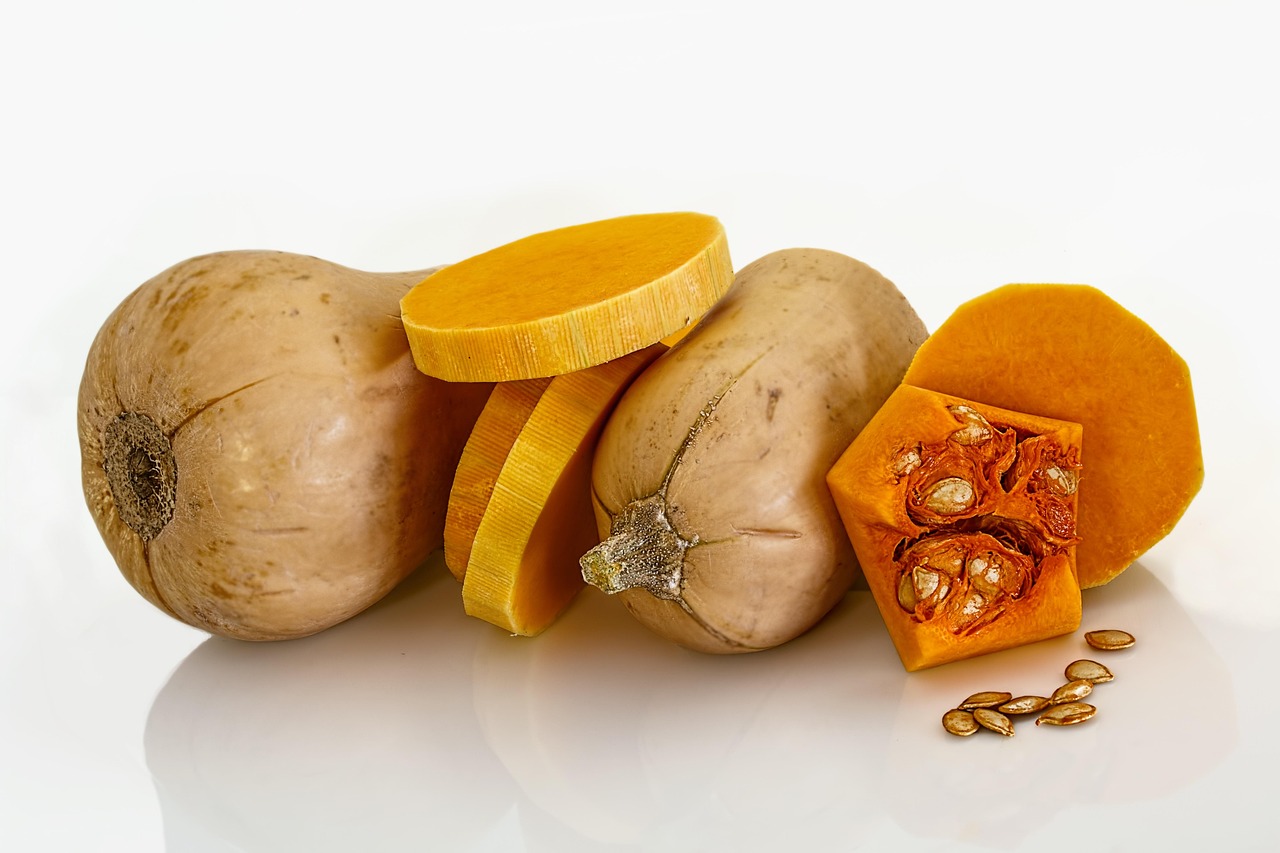
- Squash: the violina, long and sweet like a butternut, and the delica, round and floury. Kept somewhere cool, it lasts for weeks.
- Cavolo nero and the whole cabbage family: Savoy cabbage, cauliflower, broccoli and, from November, Brussels sprouts.
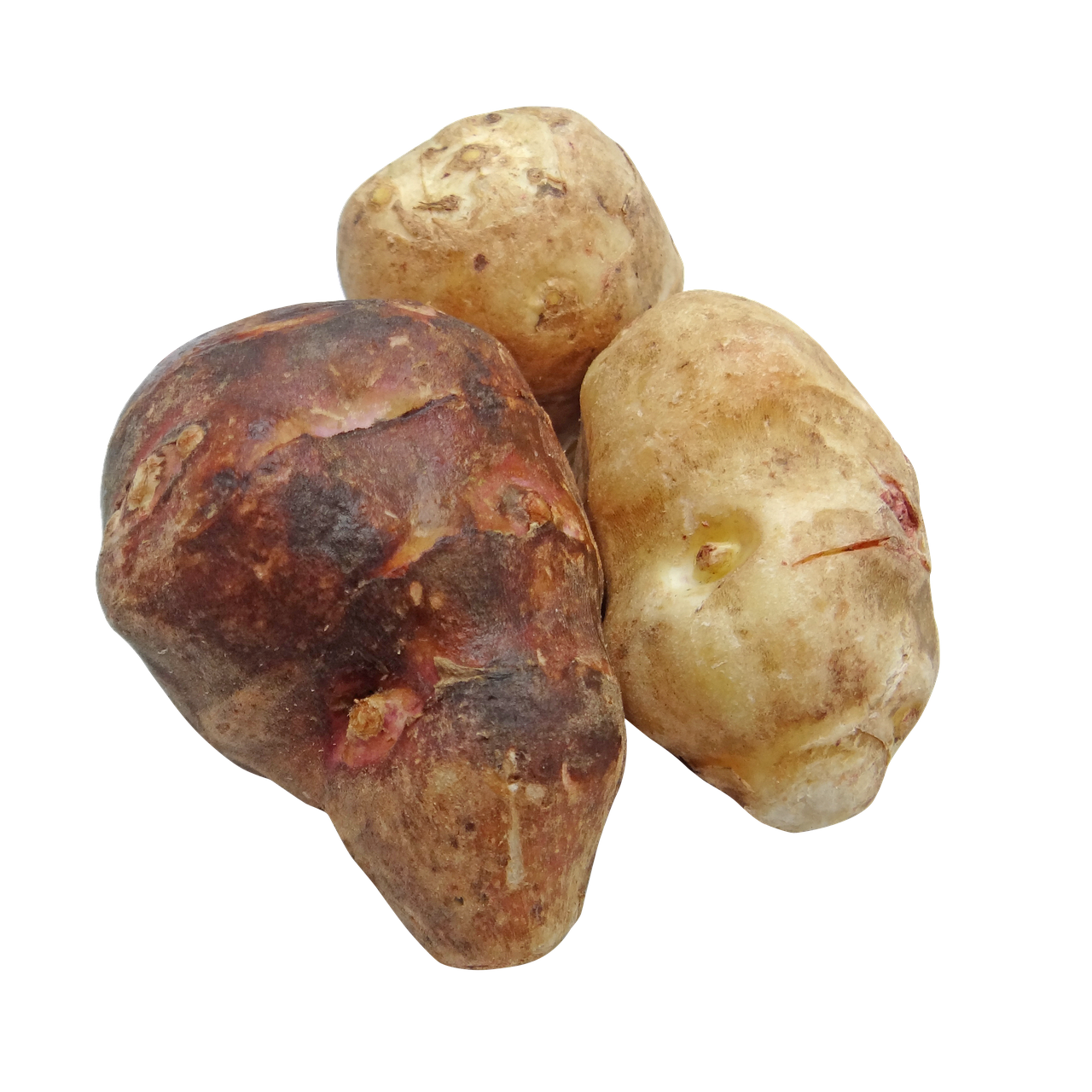
- Jerusalem artichokes (topinambur in Italian): a tuber related to the sunflower, with a flavour that recalls artichoke. Eat them raw in thin slices or cooked into a purée.
- Turnips and beetroot: crunchy and slightly sweet.
- Leeks, fennel, celeriac and spinach, which carry on right through to spring.
- Porcini mushrooms, in early autumn, for as long as the woods provide them.
- Radicchio, the bitter red chicory that arrives with the first cold, around November.
- Apples and pears in their autumn varieties, and persimmons (cachi in Italian), bright orange fruit that stays on the branches after the leaves have fallen.
- Chestnuts and pomegranates, the classic fruits of October and November.
- Figs and grapes, the last of them in early autumn; from November, kiwis arrive.
A simple rule of thumb: if a vegetable is plentiful and on lots of different stalls, it’s probably its moment.
The sea has its seasons too
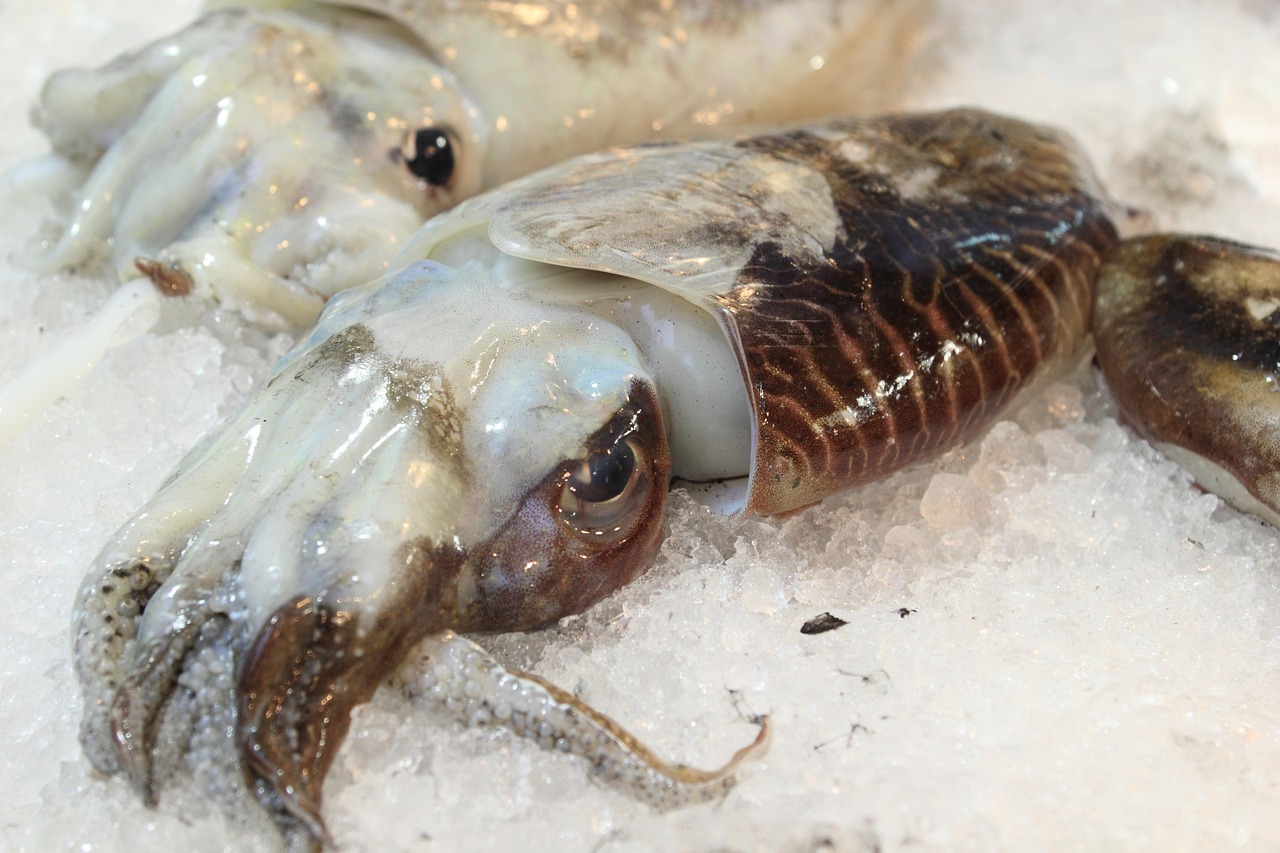
Seasons aren’t just about the vegetable patch. Fish have their moments too, and right now our Mediterranean waters are in cuttlefish and squid season. Exact timings vary a little from place to place and from year to year, but the rule is the same as at the market: when a fish is in season there’s more of it, it arrives fresh and it doesn’t have to travel halfway round the world to reach your plate.
What’s on our plates right now
borgo20 is a contemporary bistro next to Parma Cathedral: small tables close together, a long counter for coffee, cured meats in the window. Our menu doesn’t change all at once. When a new product hits the market we change one or two dishes, then another, then another. At the moment, this is how autumn has made its way in, from the fields and from the sea.
Local violina squash, fermented and turned into a smooth cream, goes into the Calamarata al nero di zucca…: calamarata is a thick, ring-shaped pasta, served here with a ragù of wild-caught Mediterranean cuttlefish cooked in its own ink and a crumble of Pan di20 (our long-proofed signature dough). Squash also sits under the Gamberi borgo20, our oven-roasted prawns: in spring and summer they come on a pea cream, right now on a squash and sage cream. Same dish, different season.
The sea also brings us Ricciola, Malvasia e Cardoncello. Ricciola is greater amberjack, a big Mediterranean fish: this one weighed 26 kilos and was caught just days ago, right in season. We serve the fillet with roasted cardoncello, a meaty autumn mushroom (also known as king oyster), and a cream made with Malvasia Ginestra, a white wine from Monte delle Vigne.
You’ll find Jerusalem artichoke in the Punta ripiena alla borgo20, our take on stuffed veal breast, a Parma classic, slow-cooked at low temperature and served with a Jerusalem artichoke cream and roasted Jerusalem artichokes. Beetroot and white turnip stay crunchy next to the duck breast in Anatra, mirtilli, rape e Pan di20 (duck, blueberries, turnips and Pan di20). And cavolo nero makes the simplest side dish on the menu: Cavolo nero e patate, kale and potatoes tossed in the pan with oil, roasted garlic and chilli.
To see what’s cooking today, take a look at our current menu: it changes often, and that’s exactly the point.
Taking autumn home
You don’t need a restaurant to eat with the seasons. Diced violina or butternut squash, roasted with oil, salt and rosemary, is ready in half an hour. Cavolo nero in a pan with garlic and a pinch of chilli takes even less. Jerusalem artichokes, well scrubbed and thinly sliced, can be eaten raw in a salad with a drizzle of olive oil and a few drops of lemon.
Next time you see shiny courgettes in November, have a look at the next stall. There’s probably a squash waiting for you.
If you’d like to taste how we use it, you can book a table online or call us on 0521 234565 (+39 0521 234565 from abroad). We’re open Tuesday to Saturday, for lunch and dinner.